












About Bird Watching in Fiji
Fiji, compared to other South Pacific nations such as New Guinea, lacks a diversity of avian life but there are enough interesting and sometimes spectacular looking birds to attract bird watching visitors from throughout the world. In all, there are about 80 species of terrestrial and freshwater birds of which about 10 have been introduced.
They are distributed throughout the islands but those interested in sampling an array bird should consider visiting three islands: Viti Levu (which has 56 of the 81 known species found in the group), Kadavu, and the Garden Island of Taveuni. In general, the larger islands tend to be more ecologically intact and the bigger birds—notably the parrots and pigeons—are easily seen.
Although space does not permit a detailed look at Fiji’s bird life I will attempt to survey some of the species. The largest bird found in Fiji is the reef heron, Egretta sacra , which feeds on small fish and other marine animals. They range from the coast to the very Interior of the largest islands.
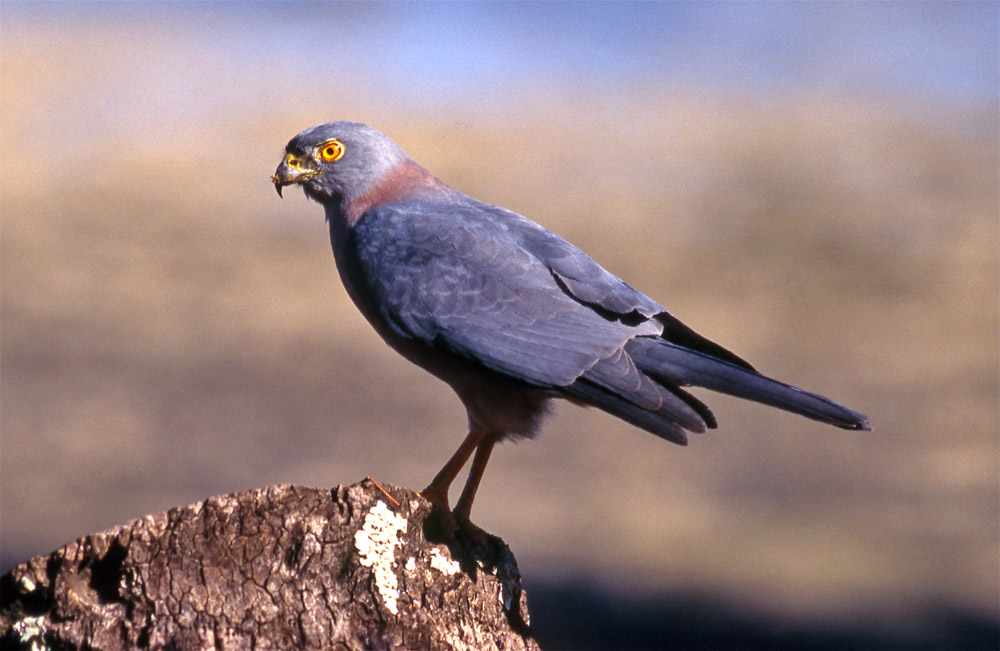
There are three species of hawk in Fiji. The most common is the swamp harrier, Circus approximans , which is most commonly seen over the grasslands, swamps and wooded areas. It feeds on rodents, birds and occasionally snakes. The Fiji Goshawk, Accipiter rufitoques , ranges from the coast to inland areas and preys on lizards, insects and other birds. Peregrine falcons, Falcus peregrinus , can also be found in Fiji but are not commonly observed. In the evenings you just might spot a the unmistakable profile of the barn owl, Tyto alba , one of which I used to observe perched on a telephone wire in my old stomping grounds of Lami, outside of Suva. They prey generally on rodents but will sometimes eat bats or other birds.
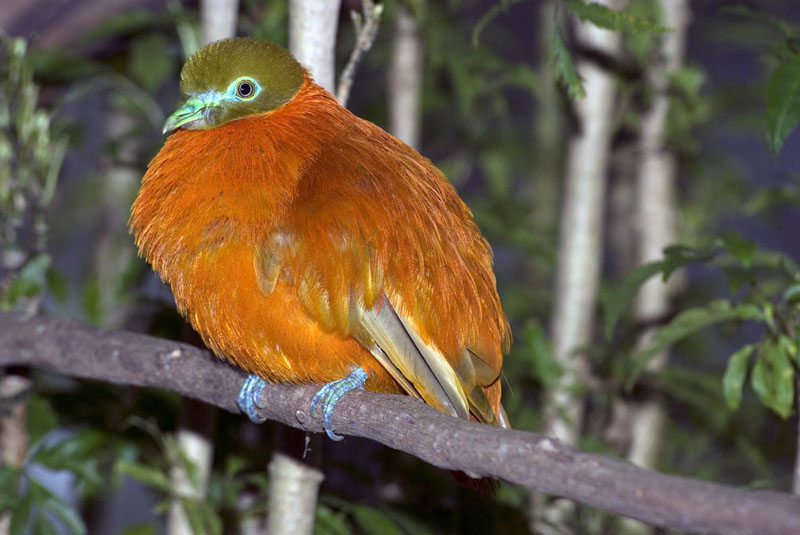
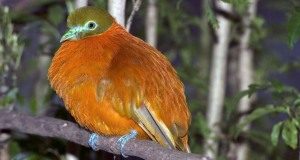
There are several varieties of dove in Fiji. The most common is the introduced spotted turtle dove, Streptopelia chinensis , which is also among the most destructive vis a vis fruit crops. Among the most sought after by birders is the orange dove, Ptiliponus victor found in Vanua Levu, Taveuni and some of the other offshore islands. The male of the species is a bright orange with the exception of an olive green head. So rare is this bird that you’ll be hard pressed to find a photo of it in any book.
Peale’s pigeon, Ducula latrans , as Paddy Ryan, the South Pacific’s premier nature photographer points out in his superb Fiji’s Natural Heritage guide, is “more likely to be seen than heard” and sounds a great deal like a barking dog. Thus when walking through a remote rainforest, the bark you’ll hear is more likely avian rather than canine in origin.
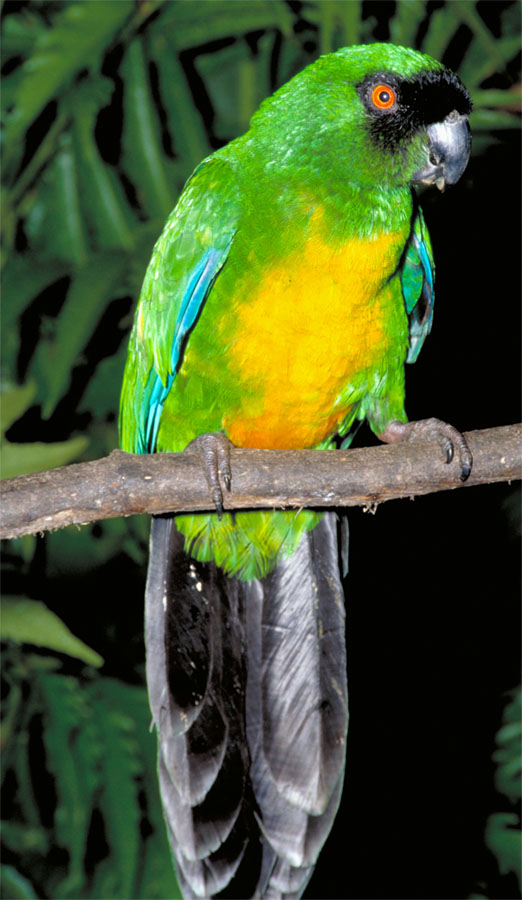
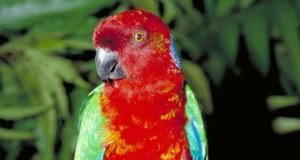
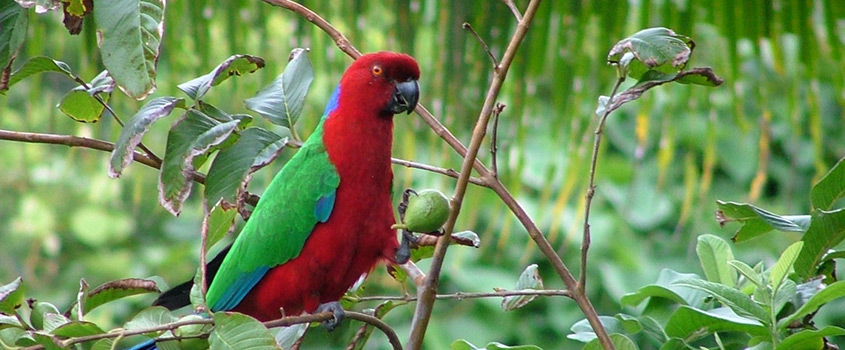
Perhaps the most famous, and easily seen of the larger Fijian birds are the yellow and red-breasted musk parrots (Prosopeia personata and Prosopeia tabuensis ) get their name from their distinctive musky odor. It’s not unusual to see small flocks squawking of red-breasted musk parrots flitting about the coconut trees in Taveuni or the other larger islands. Don’t be surprised if a taxi driver offers to procure one of these creatures for you to take home. They are popular as pets with locals and evidently are sold to visitors on the sly. This is highly illegal but unfortunately a common practice.
The white-collared kingfisher, Halcyon chloris , is a striking blue with a white collar around the neck. I’ve often seen them dipping into a friend’s swimming pool in Taveuni. Also seen on Taveuni is the silktail, Lamprolia victoriae . Once thought to be a bird of paradise, it isbirdwatching becoming increasingly rare on other islands most likely because of logging. Paddy Ryan describes it as a deep black with metallic blue spangling on the head and breast.
Much less exotic is the Indian mynah Acridotheres tristes which was introduced in the late 19th century to feed on sugar cane pests. Aggressive, intelligent and noisy, it can be seen throughout Fiji. The jungle mynah, Acridotheres fuscus introduced in the early 20th century to control the army worm, is usually seen in the countryside, often perched on the backs of cattle.
Those thinking of visiting Fiji to observe bird life might consider spending three days each in Viti Levu, Taveuni and Kadavu.
Visitors to Viti Levu might look for:
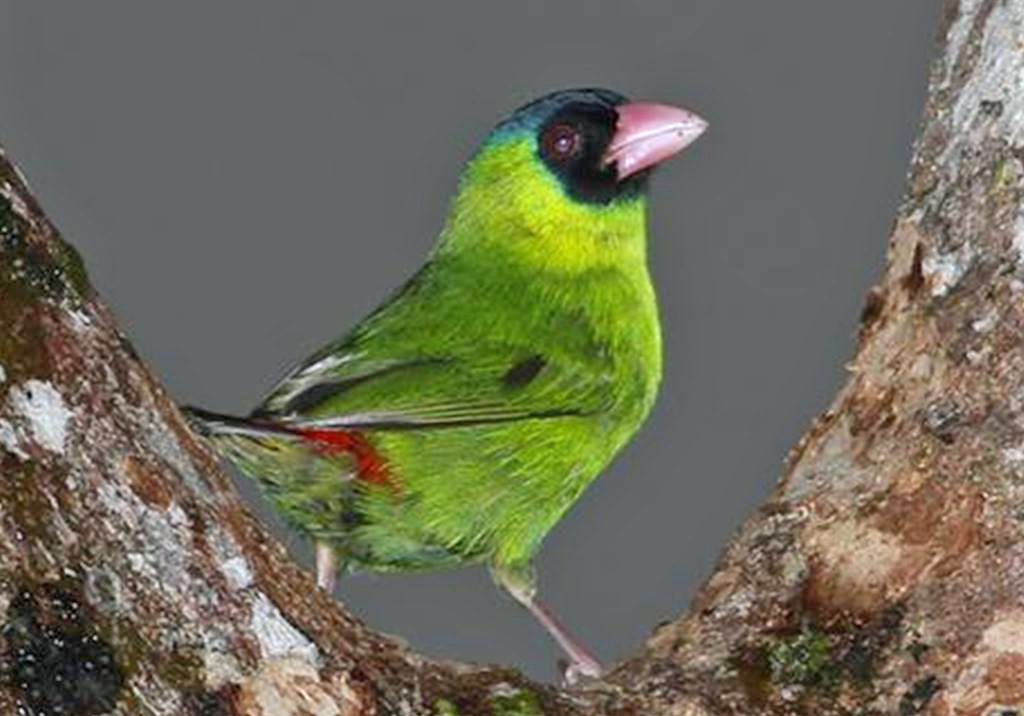
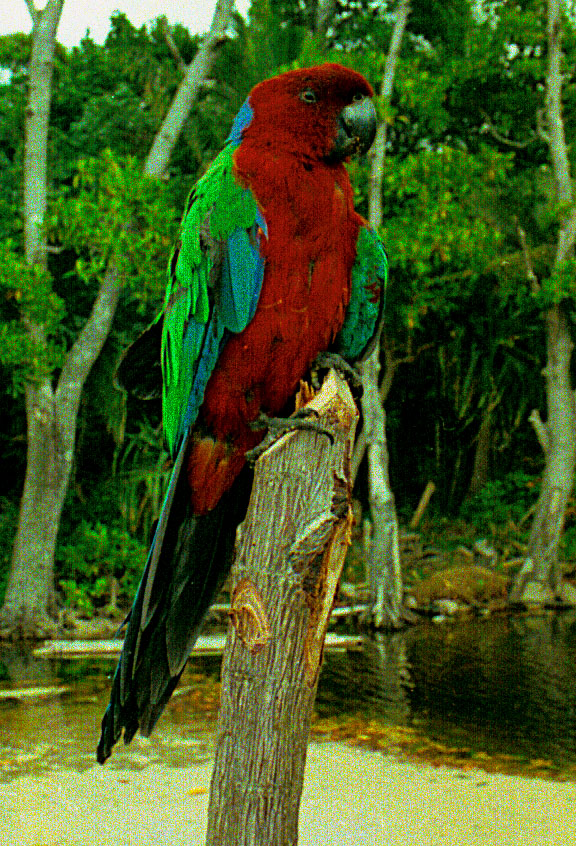
Yellow-breasted musk parrot, Prosopeia personata Golden dove, Ptilinopus luteovirens Black-faced shrikebill Pink-billed parrot-finch Long legged warbler In Taveuni keep your eye peeled for the: Orange dove, Ptilnopus victor Red shining parrot, Silktail, Lamprolia victoriae and Azure crowned flycatcher.
Kadavu birders look for:
Peale’s pigeon, Ducula latrans Kadavu fantail, R. Personata Red-breasted musk parrot (see above), Prosopeia fuscus Yellow-breasted musk parrot and Prosopeia personata.
If you’re planning to visit Savusavu on Vanua Levu, Daku Resort offers some good bird watching packages. There are a couple of options: you can do an ad hoc 4-day tour accompanied by Daku staff member Keni Tadulala – a good bird spotter but not a bird expert – for F$1210 per person (accommodation and meals not included).
If you’re interested in following up on bird “literature” I strongly suggest you pick up a copy of Paddy Ryan’s Fiji’s Natural Heritage or Birds of the Fiji Bush by Fergus Clunie. Both are available in Fiji. The fine photos that grace this section and other pages on this site are courtesy of Paddy Ryan. You can read Paddy’s bio and learn a great deal more about him on his Website.
- Diving in Fiji
- Golf in Fiji
- Introduction to Surfing in Fiji
- Seven reasons to go hiking in Fiji
- Trekking & National Heritage Parks
Top photo is Accipiter rufitorques, Fijian goshawk near Sigatoka. (Courtesy of Paddy Ryan).
I’m only going to be in Fiji (was there years ago but not a birder then) for one day and night. I am looking for a guide to pick me up at a hotel near Nadi for a day of birding (not too much hiking) and return me to the hotel that night is this possible?
Sorry to be the bearer of bad news but you’re not going to see many birds in Nadi except perhaps myna birds. Not too much in that department near an urban area. You’ll need to go to another island such as Taveuni or Kadavu. Also to see any significant variety of birds you’ll have to get up early, at the crack of dawn and do some hiking in the bush.
Dear Reader , I am looking for some HELP due to limited contact and my local reserve being closed due to the corona virus I am unable to see my winged friends, that is where you come in I am wondering if you could possibly mail me some paper info on the birds of your area, sorry I am old school all I can do is ask if possible my address is DAN GIBBONS 3350 WEST HILLSBOROUGH AV APT 715 TAMPA FL 33614 USA
Bula vanaka / Kia ora
I am a New Zealand who will be coming to Fiji in October 2023 for a tramping holiday. I would like to join a bird watching / photographing tour / safari for a week or so in late September or mid October.
Do you know where I can contact an organisation running such tours?
I would be grateful of any information you may have.
Thank you.
Phil
Auckland NZ.
Dear Reader , I am looking for some HELP due to limited contact and my local reserve being closed I am unable to see my winged friends, that is where you come in I am wondering if you could possibly post me some info on the birds of your area, sorry I am old school all I can do is ask if possible my address is DAN GIBBONS 3350 WEST HILLSBOROUGH AV APT 715 TAMPA FL 33614 USA